
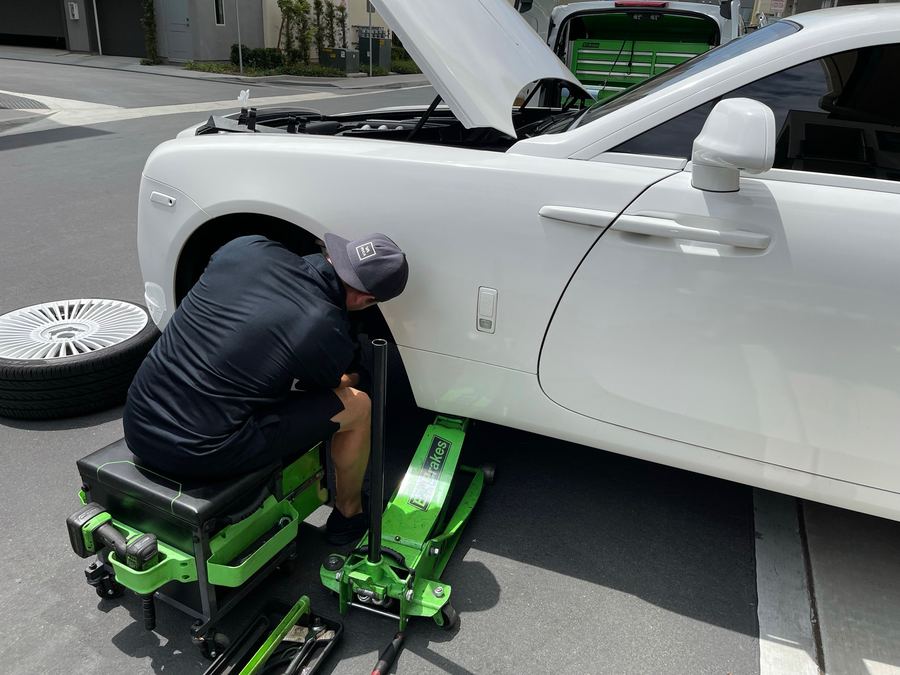
Brake pads are flat friction blocks that a caliper squeezes against a disc rotor. Brake shoes are curved linings that a wheel cylinder presses outward against the inside of a brake drum. Pads typically offer better cooling and easier inspection; shoes can last longer in rear-axle use and often cost less. Many vehicles use pads in front and shoes in the rear.
You press the pedal, the car slows down, and you probably never think about what is happening behind your wheels. Then a technician tells you "your rear shoes are worn," and you wonder: wait, aren't those called pads? It is one of the most common questions our team hears in driveways from Huntington Beach to San Clemente.
Here is the short answer. The question of brake shoes vs pads is not really a contest. They are two different parts built for two different braking systems, and most cars on Orange County roads use at least one of them. Many use both.
At Ez-Brakes, our family-owned team has been servicing brakes in driveways, office parking lots, and roadsides since 2018. Our technicians bring more than 50 years of combined hands-on experience to every job. In this guide, we break down brake shoes vs pads in plain English: how each part works, where you will find it, how long it lasts, what it costs, and which warning signs mean it is time for a replacement. By the end, you will know exactly what is on your vehicle and how to talk to any mechanic with confidence.
How Your Car's Braking System Works: Disc Brakes vs Drum Brakes
Before comparing brake shoes vs pads, it helps to understand the two systems they belong to. Every modern passenger vehicle uses a hydraulic braking system. When you press the pedal, the master cylinder pushes brake fluid through steel lines and rubber hoses to each wheel. That fluid pressure forces a friction material against a spinning metal surface. The friction converts the car's motion into heat, and that is what slows you down.
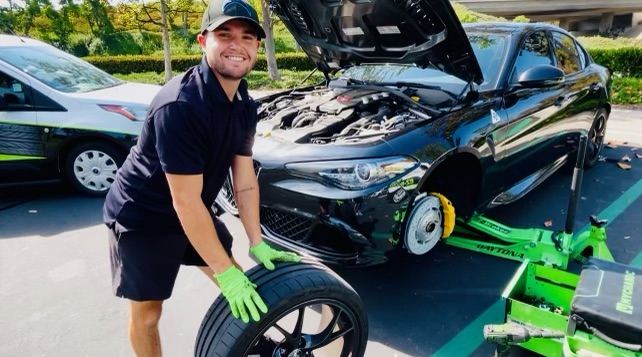
The two systems differ in how they apply that friction:
- Disc brakes use a caliper to squeeze brake pads against both sides of a flat, spinning rotor (also called a disc).
- Drum brakes use a wheel cylinder to push curved brake shoes outward against the inside of a hollow, spinning drum.
So the core distinction in brake shoes vs pads comes down to direction. Pads clamp inward on a rotor. Shoes press outward inside a drum. Almost everything else, including performance, lifespan, cost, and maintenance, follows from that one design difference.
Why the Friction Material Matters
Both pads and shoes rely on a friction lining bonded or riveted to a steel backing. That lining is an engineered blend of fibers, fillers, resins, and friction modifiers. It has to grip hard, resist heat, wear predictably, and stay quiet, all at the same time.
Friction materials have also changed for environmental reasons. In 2015, the EPA, state regulators, and automotive industry groups signed the Copper-Free Brake Initiative, an agreement to reduce copper and other metals in brake pads. Brake dust washes off roads with stormwater and ends up in waterways, where copper harms fish and aquatic life. California was one of the first states to pass its own law on the issue, which matters here in coastal Orange County. Today, quality replacement parts meet these standards, and every part we install at Ez-Brakes is compliant.
What Are Brake Pads? Disc Brake Components Explained
Brake pads are flat, rectangular friction blocks that sit inside a caliper on either side of a brake rotor. When you brake, hydraulic pistons in the caliper clamp the pads onto the rotor. The resulting friction slows the wheel quickly and evenly.
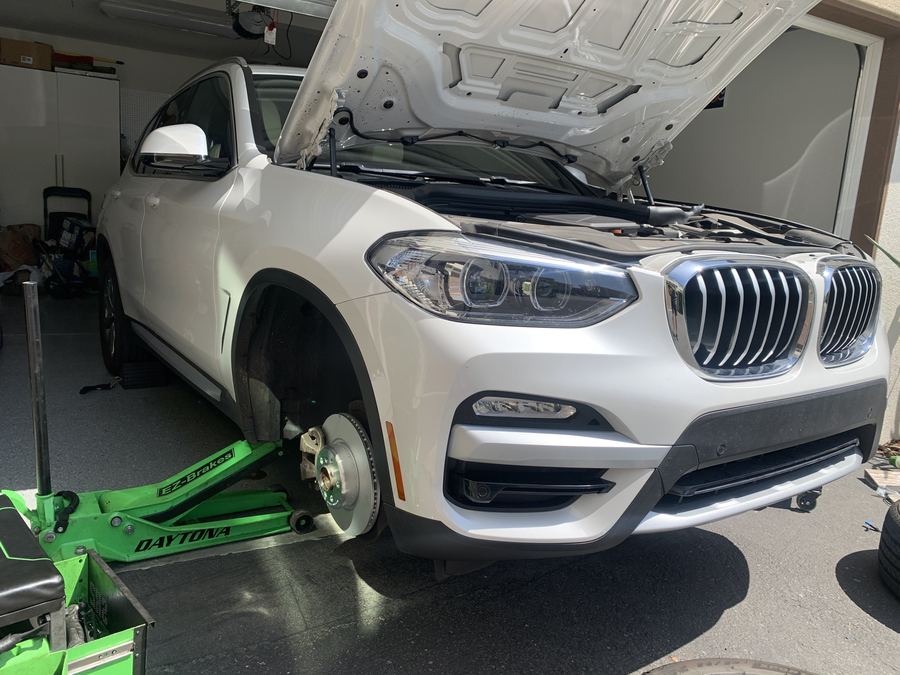
Disc brakes are on the front axle of virtually every car and light truck sold today, and on all four wheels of most newer vehicles. The front brakes handle most of the stopping force because the vehicle's weight shifts forward when you slow down. That is why front pads usually wear out faster than anything on the rear axle.
Types of Brake Pad Materials
When drivers compare brake shoes vs pads, one thing stands out quickly: pads come in more material choices. The four main types are:
- Ceramic brake pads: Quiet, low-dust, long-lasting, and stable across a wide temperature range. A favorite for daily commuters on the 405 and the 5.
- Semi-metallic brake pads: Contain steel fibers for strong bite and excellent heat handling. Great for trucks, towing, and spirited driving, but noisier and dustier.
- Organic (NAO) brake pads: Softer, quieter, and affordable, but they wear faster and produce more dust. Common on lighter economy cars.
- Low-metallic NAO pads: A middle ground that adds small amounts of metal for better heat transfer and braking feel.
Our technicians match the pad compound to your vehicle, your driving habits, and the manufacturer's specifications. We do not default to the cheapest box on the shelf.
Built-In Wear Indicators
Many brake pads include a small metal tab called a wear indicator. When the friction material gets thin, the tab touches the rotor and makes a high-pitched squeal. Think of it as your car's built-in reminder to book a brake service. Some vehicles use electronic wear sensors that turn on a dashboard warning light instead.
What Are Brake Shoes? Drum Brake Components Explained
Brake shoes are curved, crescent-shaped steel pieces with friction lining on their outer surface. They sit inside a brake drum, a hollow cylinder that spins with the wheel. When you press the pedal, a wheel cylinder pushes the shoes outward so the lining presses against the inner wall of the drum.
A typical drum brake assembly includes:
- Two brake shoes, called the leading shoe and the trailing shoe
- A wheel cylinder with small hydraulic pistons
- Return springs and hold-down springs
- A self-adjuster that keeps the shoes close to the drum as the lining wears
- The brake drum itself
Where You Will Find Drum Brakes Today
Drum brakes are most common on the rear axle of economy cars, some compact SUVs, and many pickup trucks. They also hide inside the rear rotors of many disc-equipped vehicles as a small "drum-in-hat" parking brake. Some newer electric vehicles have even returned to rear drums. Regenerative braking does most of the slowing on an EV, and an enclosed drum resists rust and corrosion better when the friction brakes are rarely used.
The Self-Energizing Advantage
Drum brakes have one clever trick called self-energizing action. When the leading shoe touches the spinning drum, the drum's rotation drags the shoe tighter against it. This multiplies braking force without extra pedal effort. It is a big reason drums remain an effective, low-cost option for rear-axle duty and parking brakes.
Brake Shoes vs Pads: Key Differences at a Glance
Here is a side-by-side look at how the two parts compare.
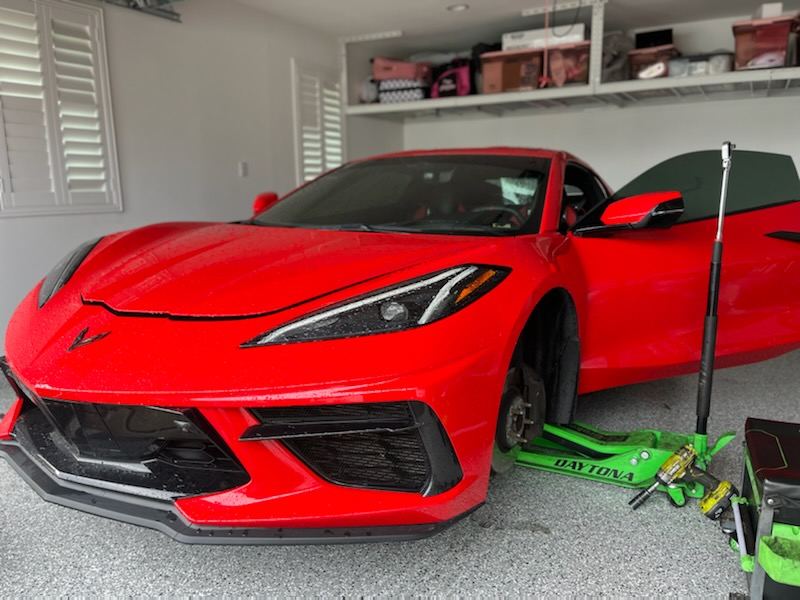
| Feature | Brake Pads (Disc Brakes) | Brake Shoes (Drum Brakes) |
|---|---|---|
| Shape | Flat and rectangular | Curved, crescent-shaped |
| Works against | A rotor (disc) | The inside of a drum |
| Braking action | Clamps inward | Presses outward |
| Typical location | Front axle, often all four wheels | Rear axle and parking brake |
| Heat dissipation | Excellent, open to airflow | Limited, enclosed design |
| Typical lifespan | About 30,000 to 70,000 miles | Often 40,000 to 80,000+ miles |
| Wet-weather recovery | Fast | Slower, can trap water |
| Inspection | Often visible through the wheel | Drum must be removed |
| Service complexity | Simpler | More parts (springs, adjusters) |
| Parts cost | Moderate | Usually lower |
Performance and Heat Dissipation
The biggest performance gap in brake shoes vs pads is heat management. Disc brakes are exposed to open air, so they shed heat fast and resist brake fade, the loss of stopping power that happens when parts overheat. That matters on long descents like Ortega Highway or Laguna Canyon Road. Drum brakes trap heat inside the drum. That is fine for the lighter rear-axle workload, but it is less ideal for repeated hard stops.
Lifespan and Durability
Here is where shoes often win. Rear brakes do less work, and drum linings have a larger contact area, so brake shoes frequently outlast pads by tens of thousands of miles. Many drivers replace their front pads two or three times before the rear shoes need attention.
Maintenance and Serviceability
Pads are easier to check and replace. A technician can often see pad thickness right through the wheel spokes. Shoes require pulling the drum and working with springs, clips, and adjusters, so the labor takes longer and demands more experience. A drum brake reassembled incorrectly can drag, pull, or fail to self-adjust, so this is a job for trained hands.
Brake Shoes vs Pads: Which One Does Your Car Have?
Most vehicles built in the last two decades have disc brakes and pads up front. The real question is the rear axle. Here is how to tell:
- Look through your wheels. A flat, shiny disc with a caliper clamped over it means disc brakes and pads. A solid, bowl-shaped drum means drum brakes and shoes.
- Check your owner's manual. The specifications section usually lists brake type for each axle.
- Consider your vehicle class. Compact cars, older sedans, and many work trucks often use rear drums. Performance cars, luxury models, and most newer SUVs use four-wheel disc brakes.
- Ask a professional. During every Ez-Brakes visit, our technician inspects all four wheels and tells you exactly what is on your vehicle. No guesswork and no upselling.
Plenty of cars carry both systems: pads in front and shoes in the rear. For those drivers, understanding brake shoes vs pads is not about choosing one. It is about maintaining both correctly.
Pros and Cons: Brake Shoes vs Pads Compared
Each design has real strengths and trade-offs. Knowing them helps you make sense of a repair estimate and plan your maintenance budget.
Advantages of Brake Pads and Disc Brakes
- Superior heat dissipation and resistance to brake fade
- Better performance and faster recovery in wet weather
- Consistent, predictable pedal feel
- Quicker inspection and faster service times
- A wide choice of pad compounds for different driving needs
Disadvantages of Brake Pads
- Wear faster, especially on the front axle
- Can produce more visible brake dust on your wheels
- Rotors may need resurfacing or replacement along with the pads
Advantages of Brake Shoes and Drum Brakes
- Lower manufacturing and replacement parts cost
- Longer service life in typical rear-axle use
- Self-energizing design delivers strong braking with less force
- Easy integration with the parking brake
- Enclosed design protects internal parts from road grime and debris
Disadvantages of Brake Shoes
- Heat builds up inside the drum, raising the risk of fade under heavy use
- More complex to service, with many springs and small parts
- Harder to inspect without taking the assembly apart
- Usually heavier than a comparable disc setup
Warning Signs: When to Replace Brake Pads or Brake Shoes
No matter which side of brake shoes vs pads your car falls on, every friction part eventually wears out. Your vehicle usually tells you before it becomes dangerous. Here is what to watch and listen for.
Signs Your Brake Pads Are Worn
- A high-pitched squeal when braking, often from the wear indicator
- Grinding or metal-on-metal sounds, which mean the pad is down to its backing plate (stop driving and call for service)
- Vibration or pulsing in the brake pedal or steering wheel
- Longer stopping distances than usual
- A brake warning light on the dashboard
- Pad material thinner than about 3 to 4 millimeters
Signs Your Brake Shoes Are Worn
- A parking brake that feels loose or must be pulled higher than usual
- A scraping or grinding noise from the rear wheels
- A low, soft, or spongy brake pedal
- Rear wheels that lock up or a car that pulls during braking
- Brake fluid leaking near the inside of the rear tires, a sign of a failing wheel cylinder
Why You Should Never Wait on Brake Repairs
Ignoring worn components turns an affordable repair into an expensive one. Worn pads can score and ruin rotors. Worn shoes can gouge drums and damage wheel cylinders. More important, weak brakes put you, your passengers, and everyone around you at risk. If you hear grinding or the pedal feels wrong, get an inspection right away.
It is also smart to check your VIN for open brake-related safety recalls on the NHTSA recall lookup. The tool is free, it is run by the federal agency responsible for vehicle safety, and it takes less than a minute.
Cost of Brake Shoes vs Pads Replacement in Orange County
Price is a major factor for drivers weighing brake shoes vs pads. The ranges below are approximate industry figures per axle, including parts and labor.
| Brake Service (per axle) | Approximate Cost Range |
|---|---|
| Brake pad replacement | $150 to $350 |
| Brake pads plus rotors | $300 to $700 |
| Brake shoe replacement | $150 to $400 |
| Brake shoes plus drums and hardware | $300 to $650 |
Your actual price depends on several factors:
- Your vehicle's make, model, and year
- OEM versus quality aftermarket parts
- The condition of your rotors or drums
- Extra components such as hardware kits, wheel cylinders, calipers, or a brake fluid flush
- Labor time, which is usually longer for drum brakes
Luxury vehicles, heavy-duty trucks, and performance cars typically land at the higher end of each range.
At Ez-Brakes, you get a free, accurate quote within 24 hours, before any work begins. California law backs you up here too. The state Bureau of Automotive Repair requires registered repair dealers to give you a written estimate and get your approval before doing the work. We think that is simply good business. And because we come to you, there is no tow bill, no ride to arrange, and no lost afternoon in a waiting room.
Brake Maintenance Tips From Our ASE-Trained Technicians
Good habits stretch the life of both pads and shoes. Here is the advice our technicians give customers every day:
- Inspect your brakes regularly. Have them checked about every 10,000 to 12,000 miles, or at every tire rotation.
- Replace parts in axle pairs. Always replace pads or shoes on both sides of an axle for balanced, straight stopping.
- Flush your brake fluid. Brake fluid absorbs moisture over time, which lowers its boiling point. Most manufacturers recommend a flush every two to three years.
- Brake smoothly. Anticipate stops and coast in stop-and-go traffic on the 55 instead of braking hard at the last second.
- Downshift on long hills. Use a lower gear on steep descents instead of riding the brakes.
- Lighten your load. Extra weight in the trunk or truck bed makes every stop work harder.
- Never ignore new noises. A squeal today can become a grinding rotor replacement next month.
Why Orange County Drivers Trust Ez-Brakes for Brake Repair
Ez-Brakes started in Irvine in 2018 with a simple belief: Orange County drivers deserve better than dropping off a car, arranging a ride, and hoping a shop does not "find" three more urgent repairs. We are family-owned and locally operated, and we built our business around skilled technicians who would rather come to your driveway than make you sit in a lobby.
Here is what you can expect on every brake job:
- Certified expertise: ASE-trained technicians with more than 50 years of combined experience on both disc and drum brake systems.
- Same-day service: Most brake repairs are completed the same day you call.
- Free 24-hour quotes: You know your cost up front, with no mystery line items.
- Green Glove Guarantee: Clean hands, clean tools, and no grease left behind on your car or driveway.
- 100% satisfaction guarantee: If you are not happy, we make it right, in writing.
- Emergency support: Stuck roadside during business hours? We dispatch a technician fast.
That approach has earned us strong reviews on Yelp and CARFAX and steady growth from a handful of jobs in Irvine to full-county coverage. Whether your car needs new pads, new shoes, or both, we treat it like our own.
Conclusion: Making Sense of Brake Shoes vs Pads
The brake shoes vs pads question has a clear answer once you see how each part works. Pads clamp a rotor in a disc brake system. They offer better cooling, stronger wet-weather performance, and easier service. Shoes press against a drum. They deliver lower cost, longer life, and a built-in parking brake. Many vehicles use both, and both need regular care.
The most important thing is not which type your car has. It is keeping those parts in good shape so you can stop safely every time. If you hear a squeal, feel a pulse, or simply cannot remember your last brake check, let our team take a look.
Ez-Brakes brings certified, same-day mobile brake repair to your home, office, or roadside anywhere from Huntington Beach to San Clemente. Call (833) 392-7253 today for a free quote, and get back on the road without ever setting foot in a shop.